Interactive physics simulations for AP Physics 1, 2, and C
Physics you can take hold of. One hundred and nine simulations that run in the browser, free, with nothing to download and no sign-in.
They cover free-body diagrams, center of mass, Newton’s three laws, static and kinetic friction, Newton’s law of gravitation, springs in series and parallel, terminal velocity and circular motion. None of them is a video. Every one waits for you to drag something, and most of them will let you be wrong first and then tell you why. Click any picture below and the simulation opens here, ready to use.
The simulation runs here straight from the topic page it belongs to, so there is only ever one copy of it. Press Escape to close it.
 Free-body diagram builderDrag the forces on yourself and aim each one. Six situations are on offer and one of the forces does not exist.
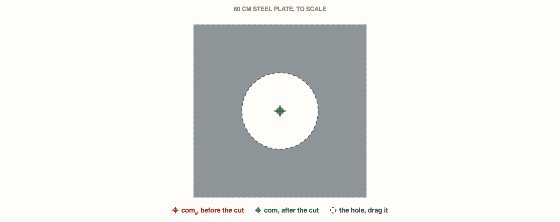 Center of mass of a cut-out plateTake a bite out of a steel plate and watch the center of mass walk off the metal altogether.
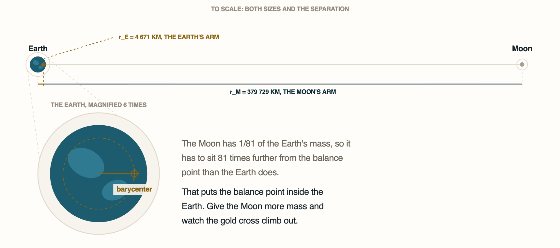 Barycenter, from the Earth and Moon out to the galaxySix scales in one widget, ending with the Sun going round the middle of the Milky Way.
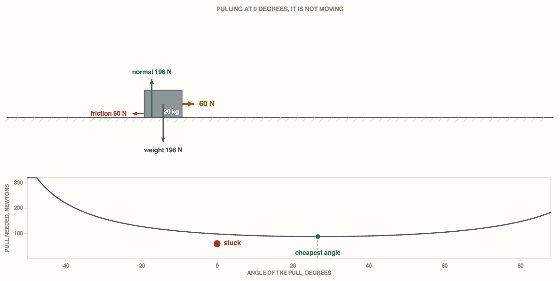 Friction, and the best angle to pullThere is a cheapest angle to drag something, it is not straight ahead, and the graph shows why.
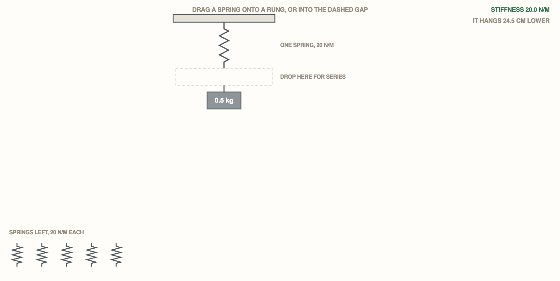 Springs in series and parallelSprings end to end let the load hang lower than one spring alone. Build it and see.
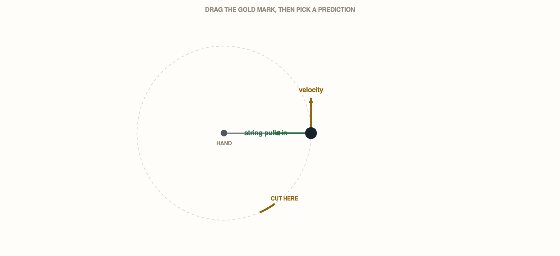 Circular motion, cutting the stringSay where the ball will go, then cut the string and find out whether you were right.
AP Physics 1 and 2
Unit 1, Kinematics
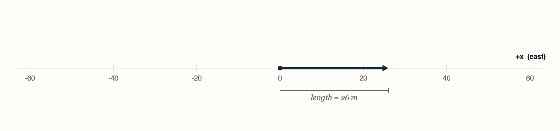 Topic 1.1, Scalars and Vectors in One DimensionDrag the arrowhead. Watch what changes when you flip which way is positive, and more importantly, watch what does not.
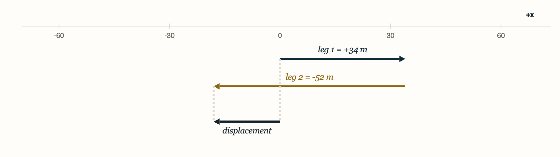 Topic 1.1, Scalars and Vectors in One DimensionSet each leg with its slider. The arrows are drawn tip to tail, to scale.
 Topic 1.2, Displacement, Velocity, and AccelerationThe curve is one object’s position against time.
 Topic 1.2, Displacement, Velocity, and AccelerationChoose a sign for the velocity and a sign for the acceleration.
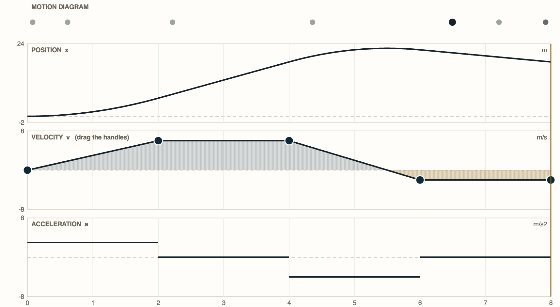 Topic 1.3, Representing MotionDrag the round handles on the velocity graph to invent a motion.
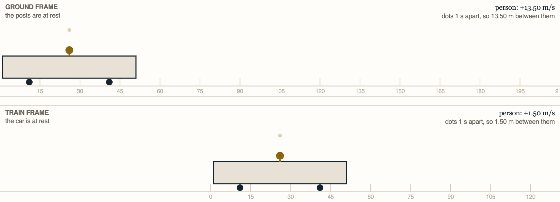 Topic 1.4, Reference Frames and Relative MotionThe same scene is drawn twice. On top, a frame fixed to the ground, where the posts stand still.
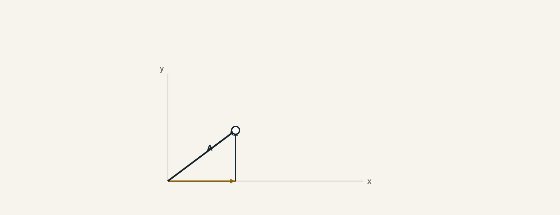 Topic 1.5, Vectors and Motion in Two DimensionsDrag the tip of the arrow. The magnitude and the angle are read off the arrow itself; the two components are read off the axes.
 Topic 1.5, Vectors and Motion in Two DimensionsOne ball is launched, and at the same instant a second is simply dropped from the same height.
Unit 2, Force and Translational Dynamics
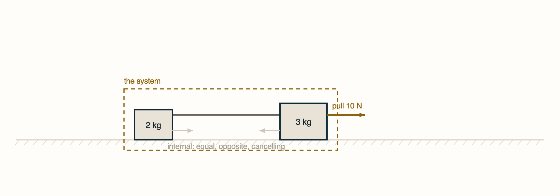 Topic 2.1, Systems and Center of MassChoose which blocks you are calling the system.
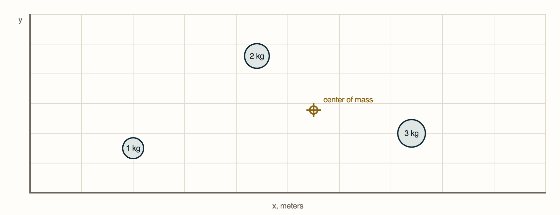 Topic 2.1, Systems and Center of MassDrag the discs. Click one without moving it to change its mass.Topic 2.1, Systems and Center of MassA 60 cm square steel plate. Take a piece out of it and the center of mass moves, because the piece you removed is no longer voting.
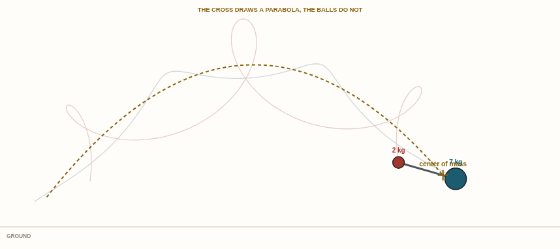 Topic 2.1, Systems and Center of MassA rod with a ball at each end, thrown across the room. Only the center of mass draws a clean parabola: everything else loops.Topic 2.1, Systems and Center of MassSix views of one idea, each a step further out.
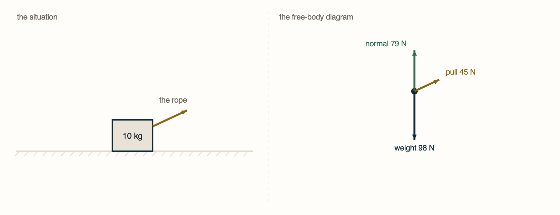 Topic 2.2, Forces and Free-Body DiagramsA crate on a smooth floor, pulled by a rope at an angle.
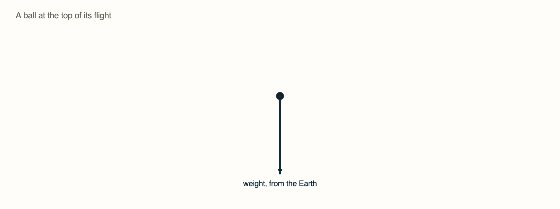 Topic 2.2, Forces and Free-Body DiagramsThree situations, each with the diagram that is correct.Topic 2.2, Forces and Free-Body DiagramsYour turn. Pick a situation, then drag a force out of the tray at the bottom and aim it: where you let go sets the direction and the length.
 Topic 2.3, Newton’s Third LawTwo skaters push off each other on ice. Change the mass of the left one and watch the two gold arrows: they never come apart.
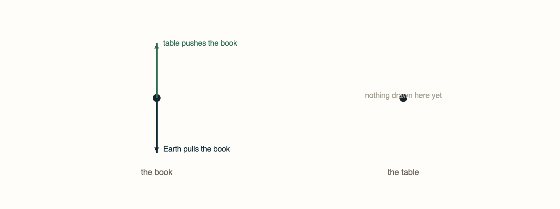 Topic 2.3, Newton’s Third LawThe same book and table, drawn four ways. Start with the forces on the book, then add the table, then isolate the one interaction they share, then see what…
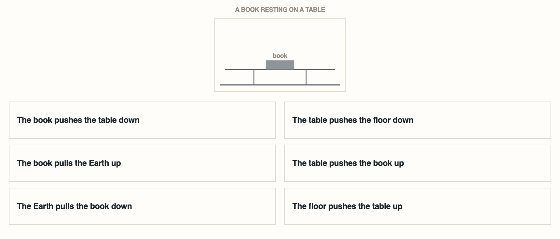 Topic 2.3, Newton’s Third LawSix forces, three interactions. Click one card, then click the card you think is its partner.
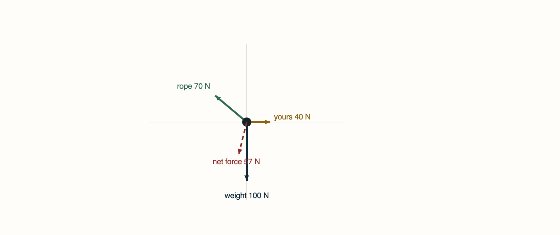 Topic 2.4, Newton’s First LawTwo of the three forces are fixed. Set the size and direction of the third until both sums read zero and the dot turns green.
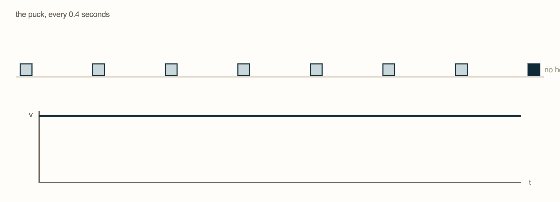 Topic 2.4, Newton’s First LawA puck sliding on a surface, photographed every 0.
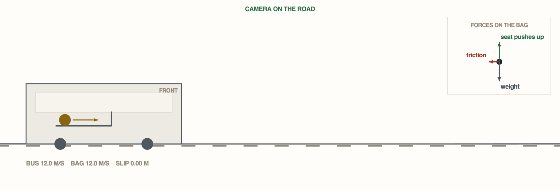 Topic 2.4, Newton’s First LawA bus doing 12 meters per second, a loose bag on the seat, and the driver brakes.
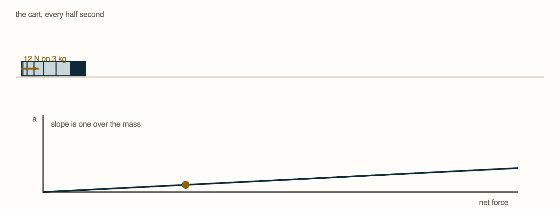 Topic 2.5, Newton’s Second LawA cart on a frictionless floor, photographed every half second, with the graph of acceleration against net force beneath it.
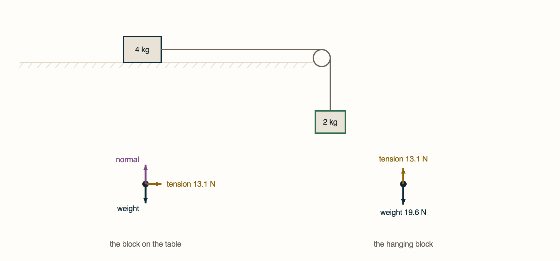 Topic 2.5, Newton’s Second LawChange either mass and watch the last readout, which compares the tension with the weight of the hanging block.
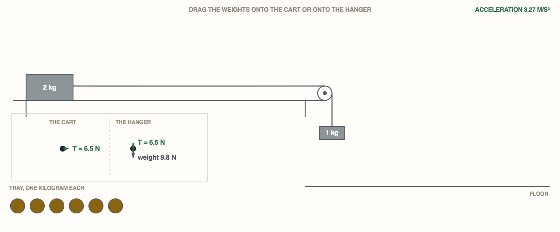 Topic 2.5, Newton’s Second LawBuild the system yourself. Six one kilogram weights sit in the tray.
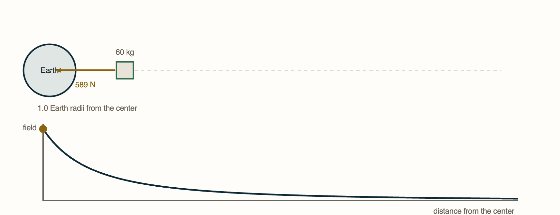 Topic 2.6, Gravitational ForceSlide the object away from the Earth and watch both the arrow and the curve.
 Topic 2.6, Gravitational ForceA person on a scale in an elevator. Change the acceleration and watch the two readouts: one of them never moves.
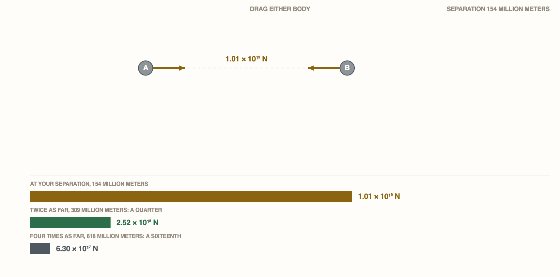 Topic 2.6, Gravitational ForceTwo bodies in empty space. Drag either one and watch what happens to the arrows: they always point at each other, they are always the same length as each o…
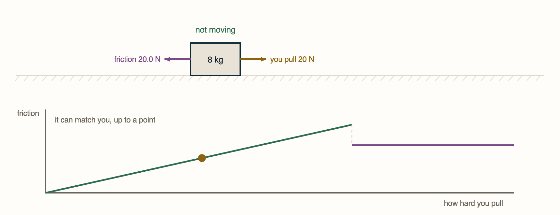 Topic 2.7, Kinetic and Static FrictionPull harder and harder on a block that is not moving.
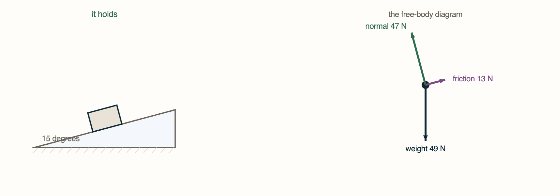 Topic 2.7, Kinetic and Static FrictionRaise the ramp and watch the two friction readouts approach each other.Topic 2.7, Kinetic and Static FrictionA 20 kg crate on a rough floor, and a rope you can aim.
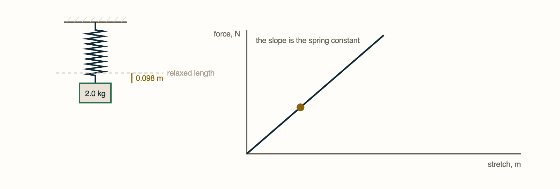 Topic 2.8, Spring ForcesHang a mass on a spring and read the stretch. Every combination lands on the same straight line through the origin, and the slope of that line is the sprin…
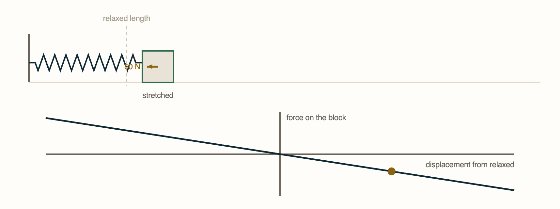 Topic 2.8, Spring ForcesMove the block to either side of the relaxed position and watch the arrow.Topic 2.8, Spring ForcesSix identical springs, each one 20 newtons per meter, and a half kilogram hanging underneath.
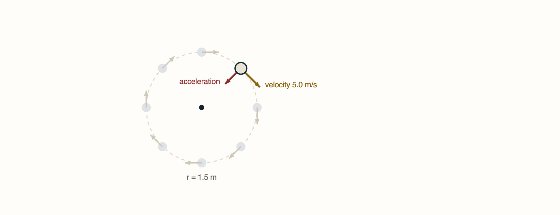 Topic 2.9, Circular MotionA ball on a circular path. The faint copies show the velocity at other points: the same length every time, a different direction every time.
 Topic 2.9, Circular MotionThree circular motions with three different providers.Topic 2.9, Circular MotionA ball on a string, going round at a steady speed.
Unit 3, Work, Energy, and Power
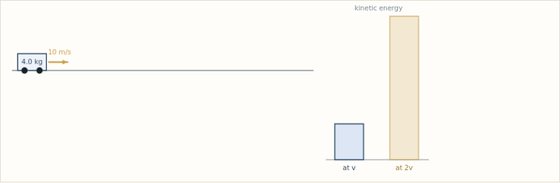 Topic 3.1, Translational Kinetic EnergySet a mass and a speed. The tall bar is the kinetic energy at that speed; the faint bar beside it is what the same object would carry at twice the speed.
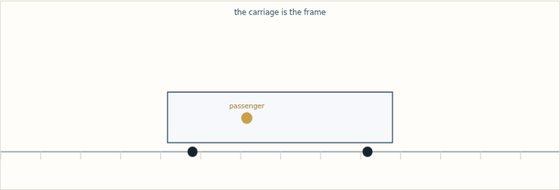 Topic 3.1, Translational Kinetic EnergyThe same passenger, two observers. Move the sliders and switch the observer to see what each one measures.
 Topic 3.2, WorkOne block, one displacement, one force of fixed size.
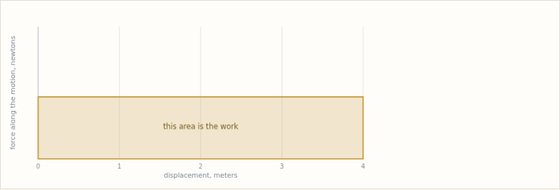 Topic 3.2, WorkThree force profiles over the same 4.0 meters.
 Topic 3.2, WorkTwo routes from the same start to the same finish.
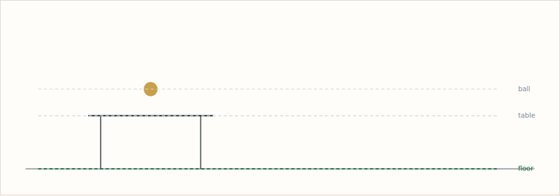 Topic 3.3, Potential EnergyOne ball, three perfectly good choices of where zero sits.
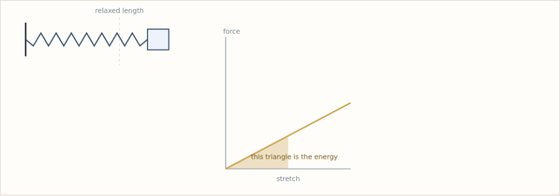 Topic 3.3, Potential EnergyDrag the stretch. The graph is force against stretch, a straight line through the origin, and the shaded triangle under it is the stored energy.
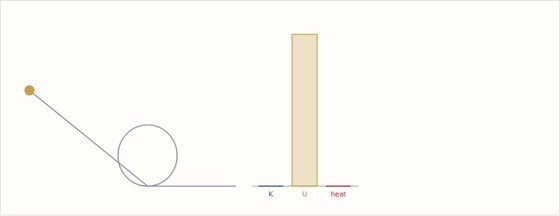 Topic 3.4, Conservation of EnergyA cart released from rest, down a ramp and around a loop.
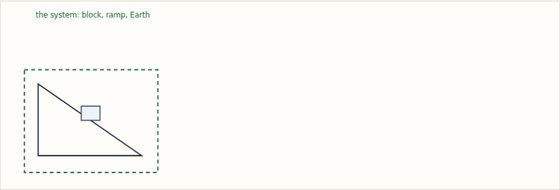 Topic 3.4, Conservation of EnergyOne block, one rough ramp, two boundaries. Switch between them and read what each choice says about the total.
 Topic 3.5, PowerTwo climbers, the same stairs, different clocks.
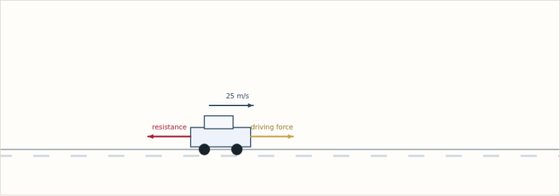 Topic 3.5, PowerA car holding a steady speed. The resistance grows with speed, which is why the power needed grows faster than the speed does.
Vectors Lab
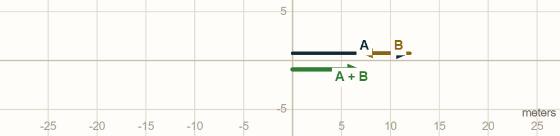 Vectors LabTwo walks along one straight road, drawn head to tail. The green arrow is the single walk that would have finished in the same place.
 Vectors LabThe two walks meet at a right angle, so adding them is nothing more than writing the two terms side by side.
 Vectors LabOne arrow lies along the axis and the other leaves its tip at an angle. Choose which function gives which coefficient and find out at once.
 Vectors LabSend both arrows wherever you like. Angles run counterclockwise from the positive x axis, so a coefficient can come out negative, and it should.
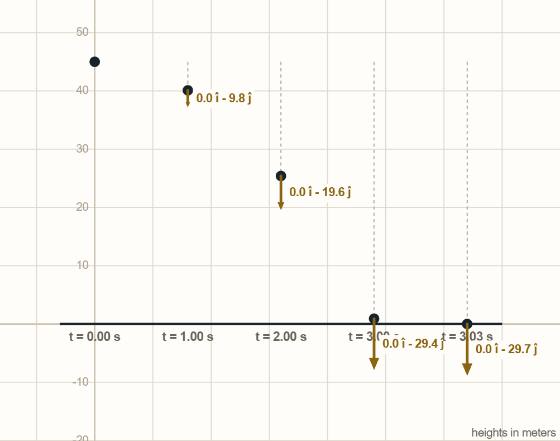 Vectors LabA ball let go from rest, with its velocity marked at every whole second. The sideways part stays zero the whole way down.
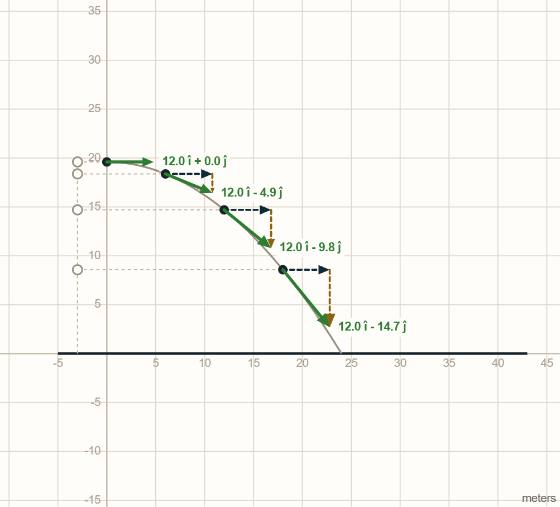 Vectors LabThe same fall with a steady sideways velocity laid on top. A second ball drops beside it, and the line joining the two never tilts.
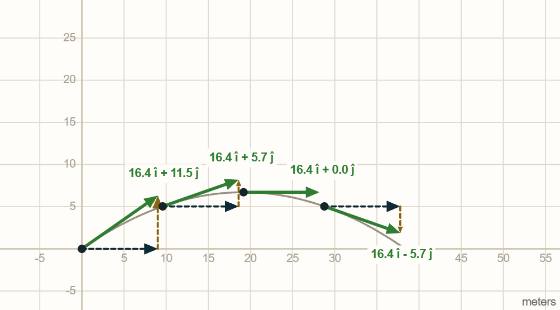 Vectors LabA launch at an angle, with four points along the flight, each carrying its horizontal part, its vertical part, and the velocity the two build.
AP Physics C, Mechanics
Unit 1, Kinematics
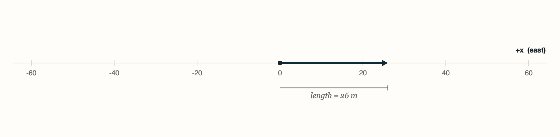 Topic 1.1, Scalars and Vectors in One DimensionDrag the head of the arrow. The drone really is somewhere, and dragging moves it.
 Topic 1.1, Scalars and Vectors in One DimensionDrag the head of the vector anywhere in the plane.
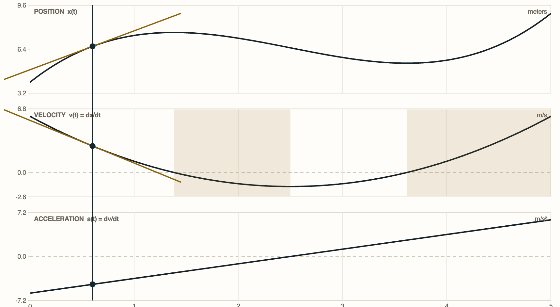 Topic 1.2, Displacement, Velocity, and AccelerationA cart moves along a track with position x(t) = 0.
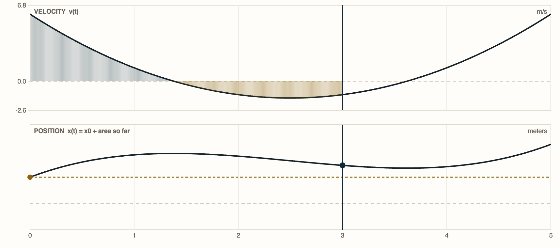 Topic 1.2, Displacement, Velocity, and AccelerationThe top panel is the same velocity graph. Drag the right hand edge of the shaded region to choose an interval starting at t equal to zero.
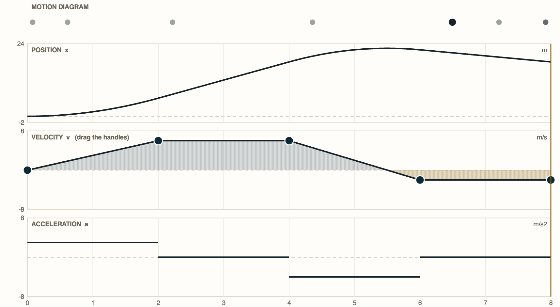 Topic 1.3, Representing MotionDrag the round handles on the velocity graph. The acceleration below is its derivative, taken segment by segment, and the position above is its integral, a…
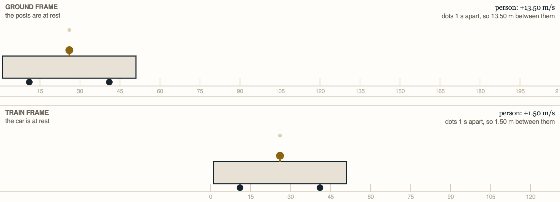 Topic 1.4, Reference Frames and Relative MotionThe same scene drawn twice. On top, a frame fixed to the ground, where the posts stand still.
 Topic 1.4, Reference Frames and Relative MotionThe upper graph is the object’s position measured in the ground frame.
 Topic 1.5, Motion in Two or Three DimensionsThe particle runs along x = A cos t, y = B sin t.
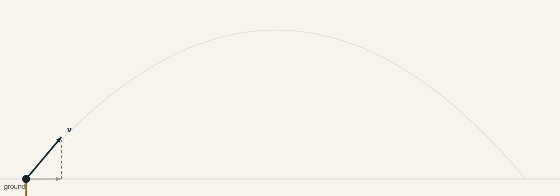 Topic 1.5, Motion in Two or Three DimensionsThe blue arrow is the velocity, drawn tangent to the path, with its two components shown against it.
Unit 2, Force and Translational Dynamics
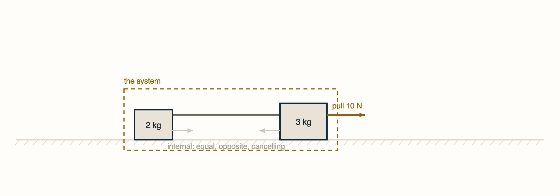 Topic 2.1, Systems and Center of MassChoose which blocks you are calling the system.
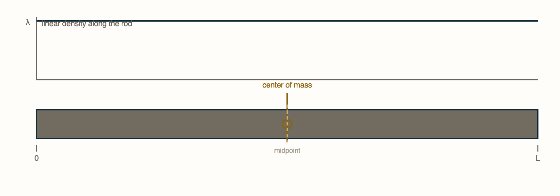 Topic 2.1, Systems and Center of MassA rod of length L whose linear density is λ = λ₀(1 + kx/L).
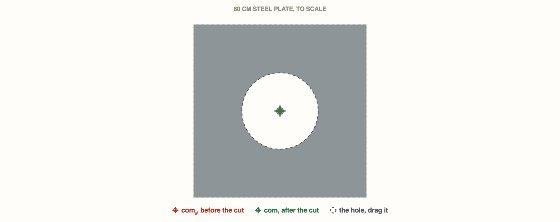 Topic 2.1, Systems and Center of MassA 60 cm square steel plate. Take a piece out of it and the center of mass moves, because the piece you removed is no longer voting.
 Topic 2.1, Systems and Center of MassA rod with a ball at each end, thrown across the room. Only the center of mass draws a clean parabola: everything else loops.
 Topic 2.1, Systems and Center of MassSix views of one idea, each a step further out.
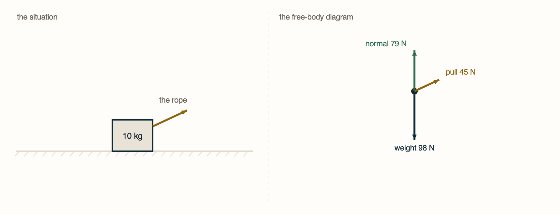 Topic 2.2, Forces and Free-Body DiagramsA crate on a smooth floor, pulled by a rope at an angle.
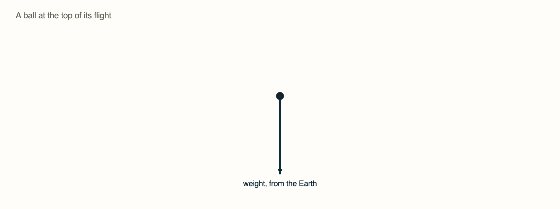 Topic 2.2, Forces and Free-Body DiagramsThree situations, each with the diagram that is correct.
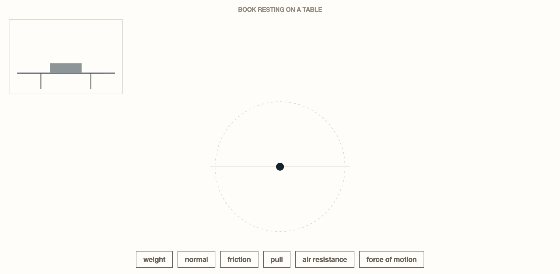 Topic 2.2, Forces and Free-Body DiagramsYour turn. Pick a situation, then drag a force out of the tray at the bottom and aim it: where you let go sets the direction and the length.
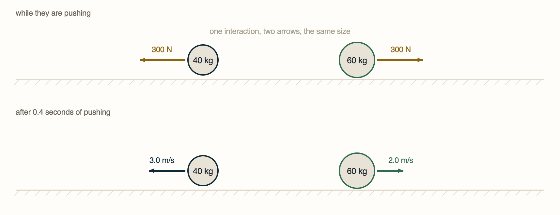 Topic 2.3, Newton’s Third LawTwo skaters push off each other on ice. Change the mass of the left one and watch the two gold arrows: they never come apart.
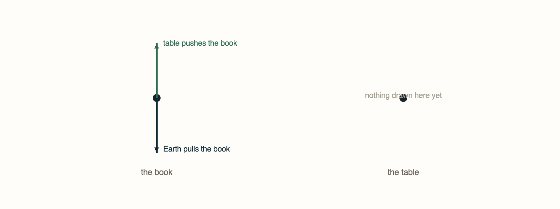 Topic 2.3, Newton’s Third LawThe same book and table, drawn four ways. Start with the forces on the book, then add the table, then isolate the one interaction they share, then see what…
 Topic 2.3, Newton’s Third LawSix forces, three interactions. Click one card, then click the card you think is its partner.
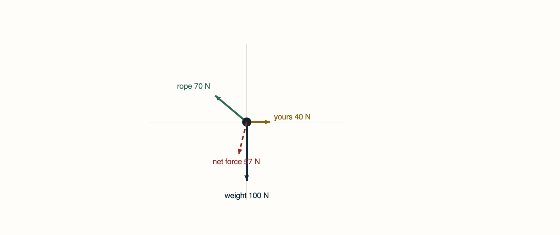 Topic 2.4, Newton’s First LawTwo of the three forces are fixed. Set the size and direction of the third until both sums read zero and the dot turns green.
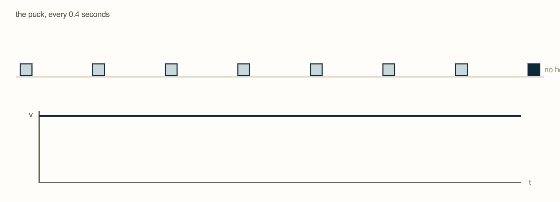 Topic 2.4, Newton’s First LawA puck sliding on a surface, photographed every 0.
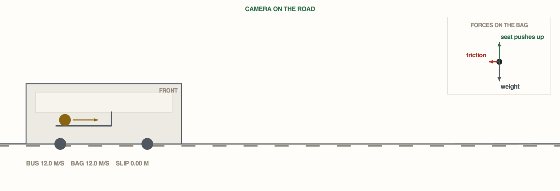 Topic 2.4, Newton’s First LawA bus doing 12 meters per second, a loose bag on the seat, and the driver brakes.
 Topic 2.5, Newton’s Second LawA cart on a frictionless floor, photographed every half second, with the graph of acceleration against net force beneath it.
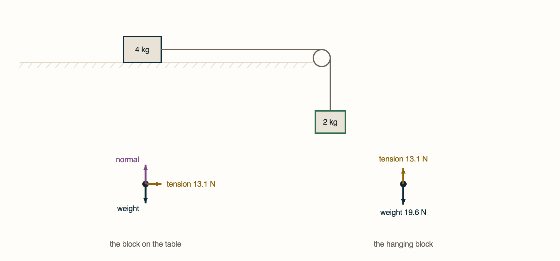 Topic 2.5, Newton’s Second LawChange either mass and watch the last readout, which compares the tension with the weight of the hanging block.
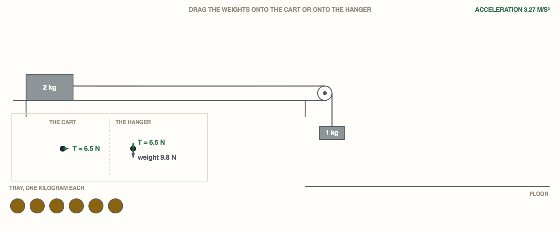 Topic 2.5, Newton’s Second LawBuild the system yourself. Six one kilogram weights sit in the tray.
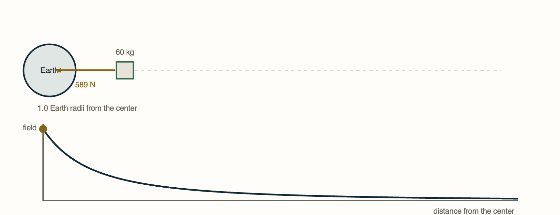 Topic 2.6, Gravitational ForceSlide the object away from the Earth and watch both the arrow and the curve.
 Topic 2.6, Gravitational ForceA person on a scale in an elevator. Change the acceleration and watch the two readouts: one of them never moves.
 Topic 2.6, Gravitational ForceTwo bodies in empty space. Drag either one and watch what happens to the arrows: they always point at each other, they are always the same length as each o…
 Topic 2.6, Gravitational ForceMove the test mass from the center of a uniform planet out into space.
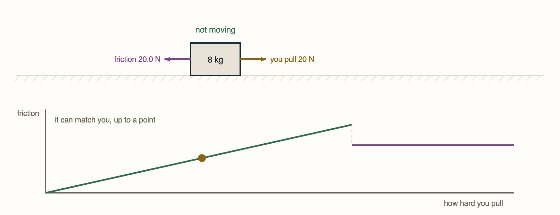 Topic 2.7, Kinetic and Static FrictionPull harder and harder on a block that is not moving.
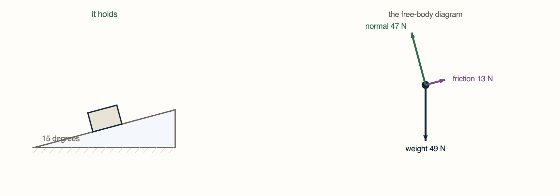 Topic 2.7, Kinetic and Static FrictionRaise the ramp and watch the two friction readouts approach each other.
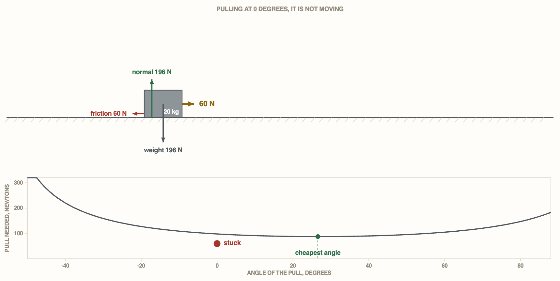 Topic 2.7, Kinetic and Static FrictionA 20 kg crate on a rough floor, and a rope you can aim.
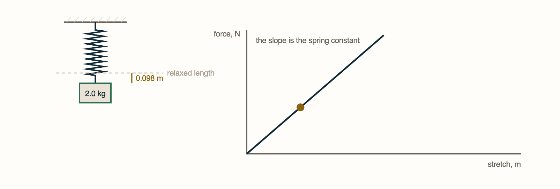 Topic 2.8, Spring ForcesHang a mass on a spring and read the stretch. Every combination lands on the same straight line through the origin, and the slope of that line is the sprin…
 Topic 2.8, Spring ForcesMove the block to either side of the relaxed position and watch the arrow.
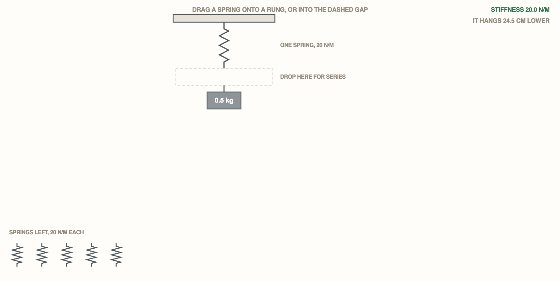 Topic 2.8, Spring ForcesSix identical springs, each one 20 newtons per meter, and a half kilogram hanging underneath.
 Topic 2.8, Spring ForcesThe same two springs and the same hanging mass, arranged both ways.
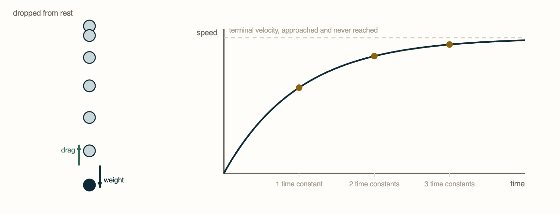 Topic 2.9, Resistive ForcesAn object dropped from rest. The three gold dots mark one, two and three time constants, and they always sit at the same fractions of the terminal velocity…
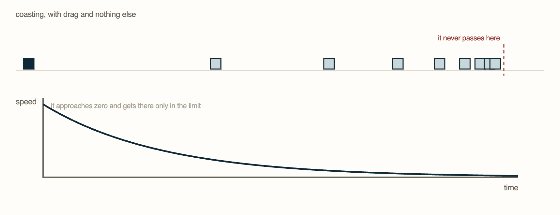 Topic 2.9, Resistive ForcesNo gravity, no push, only drag. The strobe images crowd toward a line the object never crosses, and the speed curve approaches zero without touching it.
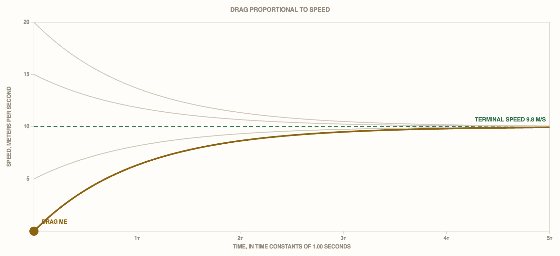 Topic 2.9, Resistive ForcesDrag the gold dot up and down the left edge to choose the speed the object starts with.
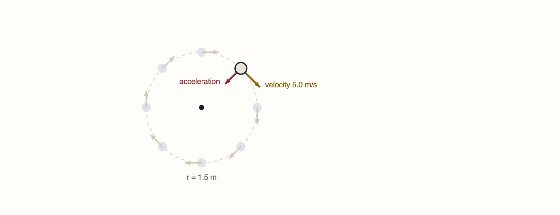 Topic 2.10, Circular MotionA ball on a circular path. The faint copies show the velocity at other points: the same length every time, a different direction every time.
 Topic 2.10, Circular MotionThree circular motions with three different providers.
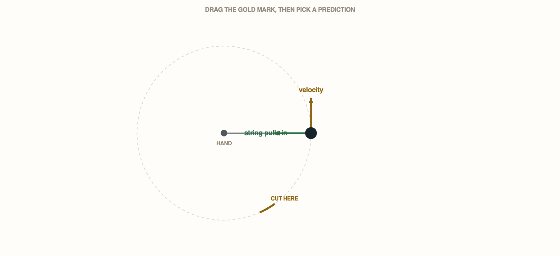 Topic 2.10, Circular MotionA ball on a string, going round at a steady speed.
Unit 3, Work, Energy, and Power
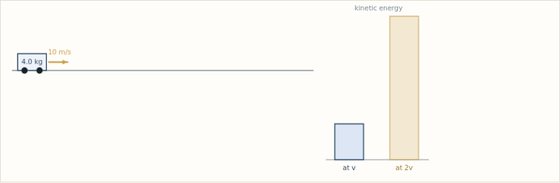 Topic 3.1, Translational Kinetic EnergySet a mass and a speed. The tall bar is the kinetic energy at that speed; the faint bar beside it is what the same object would carry at twice the speed.
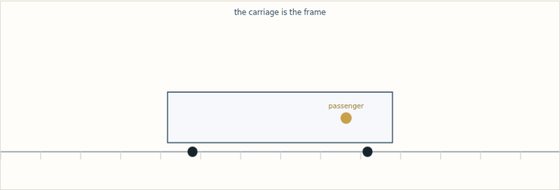 Topic 3.1, Translational Kinetic EnergyThe same passenger, two observers. Move the sliders and switch the observer to see what each one measures.
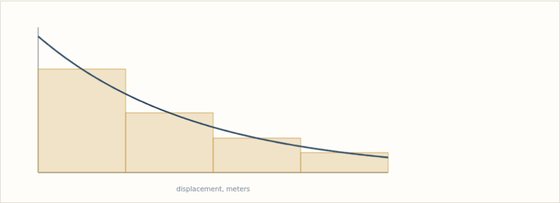 Topic 3.2, WorkThe same curved force profile, cut into a number of slices you control.
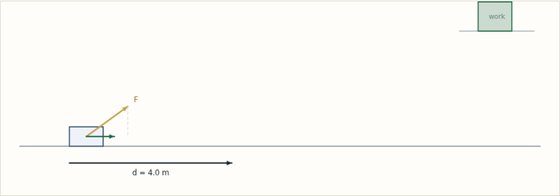 Topic 3.2, WorkSweep the angle between the force and the displacement.
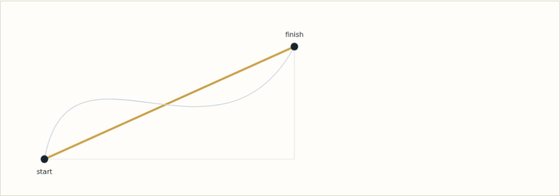 Topic 3.2, WorkTwo routes between the same two points. Gravity is conservative and does not care which one you took.
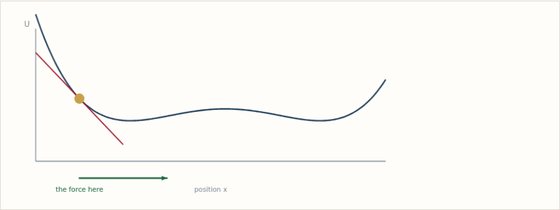 Topic 3.3, Potential EnergyDrag the marker along the curve. The straight line is the tangent, the arrow underneath is the force, and the minus sign is why the arrow always points downhill.
 Topic 3.3, Potential EnergyDrag the total energy line up and down. Where it meets the curve, the kinetic energy has run out and the system turns around.
 Topic 3.4, Conservation of EnergyA cart released from rest, down a ramp and around a loop.
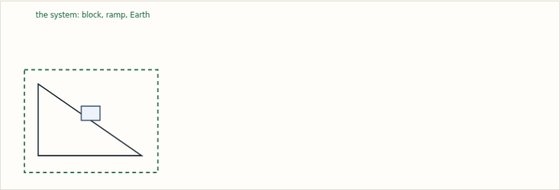 Topic 3.4, Conservation of EnergyOne block, one rough ramp, two boundaries. Switch between them and read what each choice says about the total.
 Topic 3.5, PowerA motor whose work grows as the square of the time.
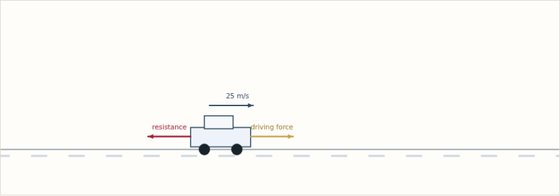 Topic 3.5, PowerA car holding a steady speed. Resistance grows with the square of the speed, so the power needed grows with the cube.
These cover Units 1, 2 and 3 so far, kinematics, dynamics, and energy, and they grow as the courses do. Every picture is the simulation itself, caught at the moment it opens. The full topic lists are on the AP Physics 1 and 2 and AP Physics C course pages. Nothing here needs a class code.